 seek


You move house and take a bookshelf apart. Now one small metal disc is missing, the instructions went in the recycling years ago, and the shop sells hundreds of shelves that look the same. Or you got a second-hand wardrobe with a bag of mystery fittings and no paper at all. The question is: what is this piece of furniture, what is this part, and how do I put it back together?
Most furniture identifier apps tell you a style and a price. Seek is for the practical side: it names the piece and the fitting from a photo, then Find It helps you look for the assembly instructions (the manual), spare parts, repair guides and where to buy. This guide shows how.
Quick answer
First look for a label: a sticker or stamp on the back panel, under a shelf, inside a drawer or under the base often shows the product name, an article number or a date. Then scan the furniture and the loose part with Seek. Ask Seek what the part does and where it goes. Open Find It for the assembly instructions, spare parts and similar items. Small fittings are often standard sizes, so measure them before you buy.
A worked example: the bookshelf with a missing cam lock
A tall white bookshelf comes out of the moving van with one wobbly side. A round metal disc, about the size of a coin, is missing from a hole near the top. There is still a metal pin with a round head sticking out of the side panel.
You scan the empty hole and the disc from the other side. Seek suggests a cam lock in the furniture fittings category. You ask Seek: “How does a cam lock work?” The answer: the pin is a cam bolt screwed into one panel; its head slides into the cam lock in the other panel, and a half turn with a screwdriver pulls the two panels tight. Without it, the side wobbles.
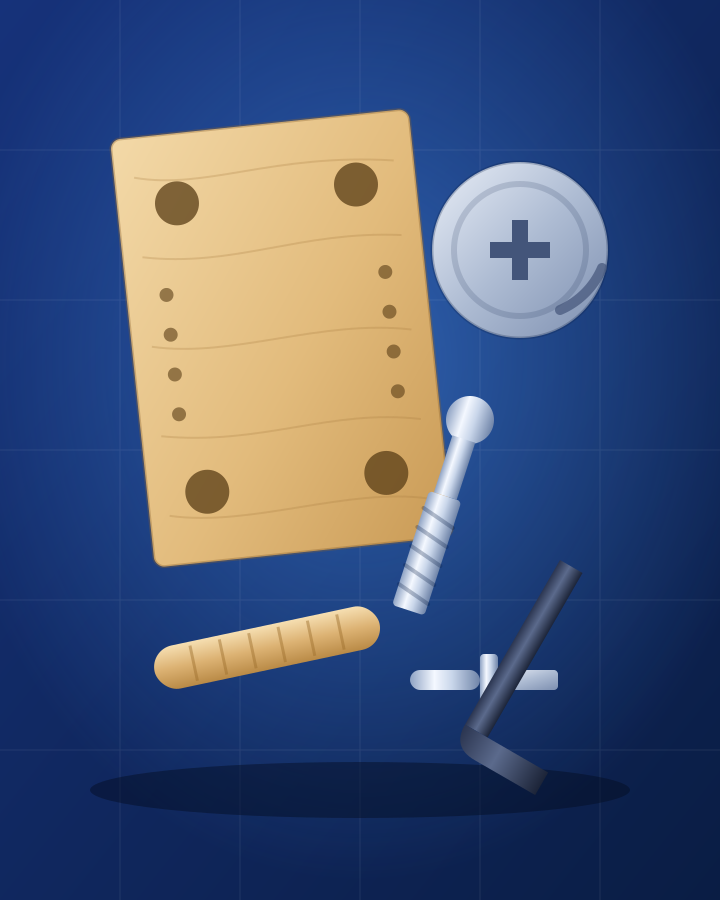
Then you scan the whole shelf. Seek names the kind of furniture, and Find It helps you look for the assembly instructions and spare parts. The instructions show which fitting goes where; many big furniture shops also give free small spare fittings or sell them in packs. You measure the cam lock (the diameter of the hole, often about 15 mm) and buy the same size. The image at the top of this page is an illustration, not an app screen.
Step by step: from mystery part to a solid piece of furniture
- Look for a label first. Check the back panel, under the lowest shelf, inside drawers, under the base and on the bag of fittings. Write down any name, article number or date.
- Lay the parts out. Put loose fittings on a plain surface, grouped by type. Count them; the missing one is often obvious when you see the pairs.
- Scan the part with Seek. Use good light and fill the frame. For tiny parts, put a coin next to them for scale. Seek suggests a name, a category and a confidence score.
- Scan the whole piece. Step back and take a photo of the full furniture. Seek names the kind of furniture, which helps when you search for its instructions.
- Ask Seek. For example: “Where does this part go?”, “Can I use a screw instead?” or “Why does my shelf wobble?”
- Use Find It. Look for the user manual or assembly instructions, spare parts, repair guides, where to buy, and similar items.
Quick reference: flat-pack fittings and how to recognise them
- Cam lock Round metal disc in a hole on the face of a panel, with a slot or cross on top and a gap on the side.
- Cam bolt (cam dowel) Metal pin with a round head on one end and a screw thread on the other; goes into the cam lock.
- Wooden dowel Short wooden rod with grooves along it; joins panels and keeps them aligned. 8 mm is a common width.
- Shelf pin (shelf support) Small metal or plastic peg that sits in a row of small holes and holds a shelf. 5 mm is a common size.
- Connector bolt and barrel nut Long bolt with a flat head plus a small round nut with a slot; used for bed frames and tables.
- Confirmat screw Thick screw with a wide thread and a flat head; joins chipboard panels directly.
- Allen key (hex key) L-shaped metal key with six sides; size it with the hole in the bolt head.
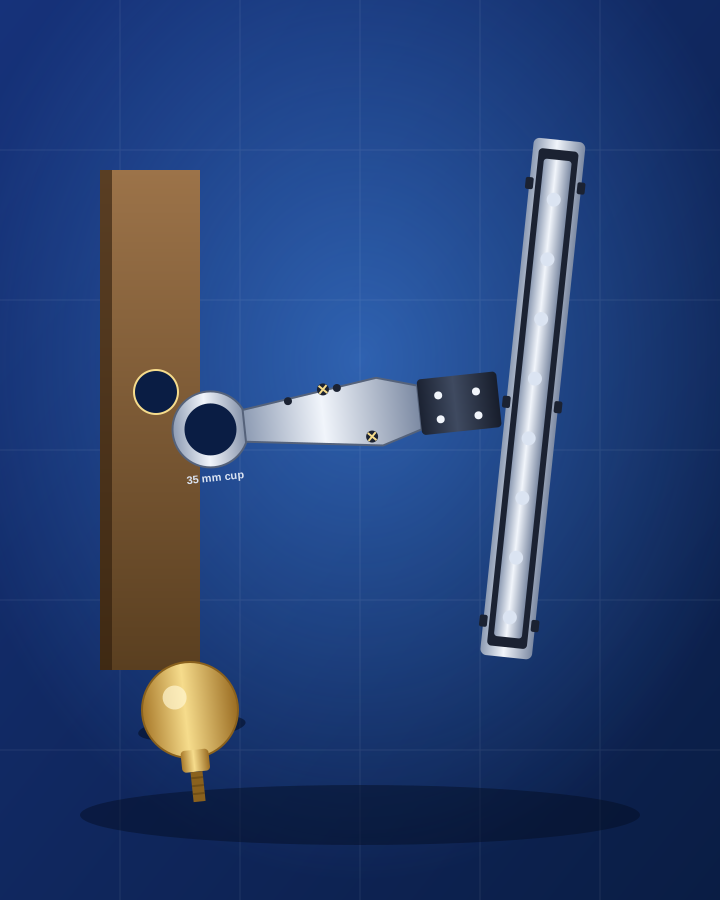
- Concealed cup hinge Round cup sunk into a cabinet door plus an arm that clips onto a plate inside the cabinet.
- Drawer runner (slide) Pair of metal or plastic rails, one on the drawer and one in the cabinet; check the length and how the two parts click.
- Back panel nails or clips Small nails or plastic clips that hold the thin back board; the back keeps tall furniture square.
- Adjustable foot (leveller) Screw-in foot with a round pad, under wardrobes and kitchen units.
- Anti-tip kit (wall strap) Strap or bracket that fixes tall furniture to the wall.
No instructions? What still works
If you cannot find the exact manual, the instructions for a similar piece from the same maker often use the same fittings and steps. Take photos of each panel before you take furniture apart, so you have your own guide for later. Put the fittings for each piece in a labelled bag. When you rebuild, tighten every cam lock and screw only lightly at first, check that the furniture is square, then tighten fully. And use the fitting the furniture was designed for: a random wood screw in a cam lock hole will not hold the same way.
Safety
Tall furniture such as bookshelves, wardrobes and chests of drawers can tip over, especially with children in the home. Use the anti-tip strap or bracket and fix it to the wall with a fixing that suits your wall; see identify a screw or bolt by photo. Do not stand on shelves or drawers. If a panel is cracked around a fitting hole, a new fitting may not hold; ask the maker for a spare panel.
Honest limits
Seek names the kind of furniture and the fitting, and helps you look for the manual, spare parts, repair guides and where to buy. Many flat-pack pieces look very alike, so Seek may not know the exact product name or model; a label, article number or receipt is more reliable. A photo cannot measure a hole or a thread, so measure before you buy. Seek does not give a style history or a value. A result can be wrong, and the photo is sent to Seek’s servers to be identified.
For loose screws and bolts, see identify a screw or bolt by photo. For hinges, drawer slides, knobs and pulls, see identify door or cabinet hardware by photo. For any broken part with a model number, see find a spare part from a photo and find a user manual from a photo. Found the fitting in a drawer and not sure what it is? Try what is this thing in my junk drawer? Need the right tool to build it? See identify a tool by photo.
Common questions
How do I find instructions for furniture without the model number?
Look for a label on the back panel, under shelves, inside drawers or under the base. If there is none, scan the furniture with Seek to get the kind of piece and use Find It to look for the manual and similar items. Instructions for a similar piece from the same maker often use the same steps.
What is the round metal disc in my furniture called?
It is usually a cam lock. It grips the round head of a metal pin (a cam bolt) in the next panel and pulls the two panels together when you turn it.
Where can I get a missing fitting for flat-pack furniture?
Many furniture makers and shops give or sell spare fittings. Hardware shops sell standard cam locks, dowels and shelf pins; measure the hole first so you buy the right size.
Can Seek tell me the style or value of my furniture?
No. Seek names the kind of furniture and its parts, and helps you find the manual, spare parts, repair guides and where to buy. It does not give valuations.