 seek


A mechanic says a word you have never heard. A black plastic thing is lying on the garage floor after a repair. A box of parts comes with a used car. In each case the problem is the same: you cannot search for a part when you do not know what it is called.
The name is only half of the job, though. With car parts, the right name with the wrong fit is still the wrong part. This guide shows how to use Seek to get the name from a photo, and then how to go from the name to a part that really fits your car.
Quick answer
Take a clear photo of the part with Seek to get its name and category (for example “ignition coil”, Automotive). Then look on the part itself for a stamped or printed part number. Search with that number, or with your car’s year, make, model and engine. Use Find It to look for where to buy, repair guides and similar items. For brakes, steering, suspension and airbags, use the maker’s part and a qualified mechanic.
A worked example: the black part with a long rubber tube
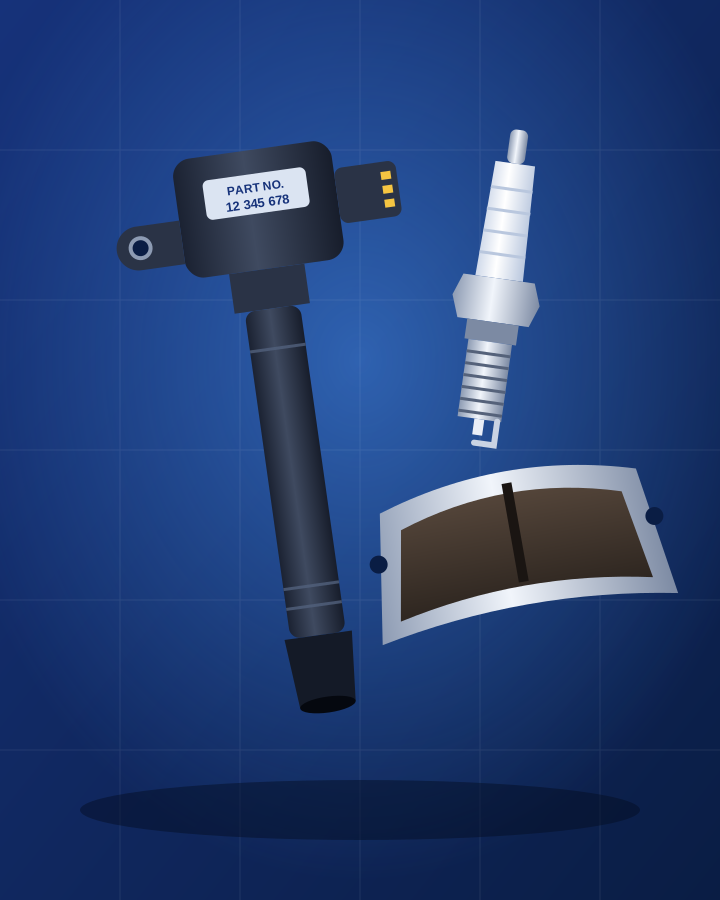
You are clearing out a garage and find a black plastic part. It has a square top with a small plug socket on one side, one bolt hole on the other side, and a long rubber tube going down from the middle. It looks important. It also looks like nothing you can name.
You lay it on a plain surface and scan it. Seek suggests an ignition coil in the automotive category. You ask a follow-up in Ask Seek: “What does it do?” The answer is plain: it turns the low voltage of the car battery into the high voltage that the spark plug needs. The rubber tube pushes down over the top of a spark plug, and most modern petrol engines have one coil for each cylinder.
Now the useful part. You turn the coil over and find a number printed on the top. That number is what a parts shop needs. Find It then helps you look for where to buy one, repair guides for changing it, and similar items. The image at the top of this page is an illustration, not an app screen.
Step by step: from a photo to a part that fits
- Clean it and scan it. Wipe off oil and dust, put the part on a plain background, and scan it with Seek. You get a name, a category and a confidence score.
- Ask what it does. Use Ask Seek for a simple explanation, and ask where on a car this kind of part normally sits. This tells you if the name makes sense.
- Find the part number. Look for numbers stamped into metal, moulded into plastic, or printed on a sticker. Take a close photo of them. A second number may be the factory’s own code; keep both.
- Write down your car’s details. Year, make, model and engine size. The VIN (the long code on the car’s papers, and often on a small plate you can see through the windscreen) is the most exact way to match parts.
- Note the position. Many parts are different for front and rear, left and right. Left and right are named from the driver’s seat, looking forward.
- Use Find It. Look for where to buy, repair guides, and similar items. Compare the photo in the shop with your part: the same plug shape, the same bolt holes, the same length.
Quick reference: common car parts and how to recognise them
- Ignition coil Square plastic top with a plug socket and one bolt hole, long rubber tube underneath.
- Spark plug White ceramic body, a metal hex in the middle, a thread, and a tiny bent metal hook at the tip.
- Oxygen sensor Looks like a spark plug with a wire coming out of it. It screws into the exhaust pipe.
- Air flow sensor Short plastic tube or a small insert with a plug, found between the air filter box and the engine.
- Alternator Heavy round metal body with air slots, copper wire visible inside, and a belt pulley on the front.
- Starter motor A metal cylinder with a smaller cylinder fixed on top of it and a small gear at one end.
- Brake pad A flat steel plate with a thick dark block bonded to one side, often with a slot down the middle.
- Cabin air filter A flat rectangle of folded white paper, usually behind the glove box. The engine air filter is similar but has a rubber edge.
- Thermostat A small round metal valve with a spring and a flat rim, about the size of an egg cup.
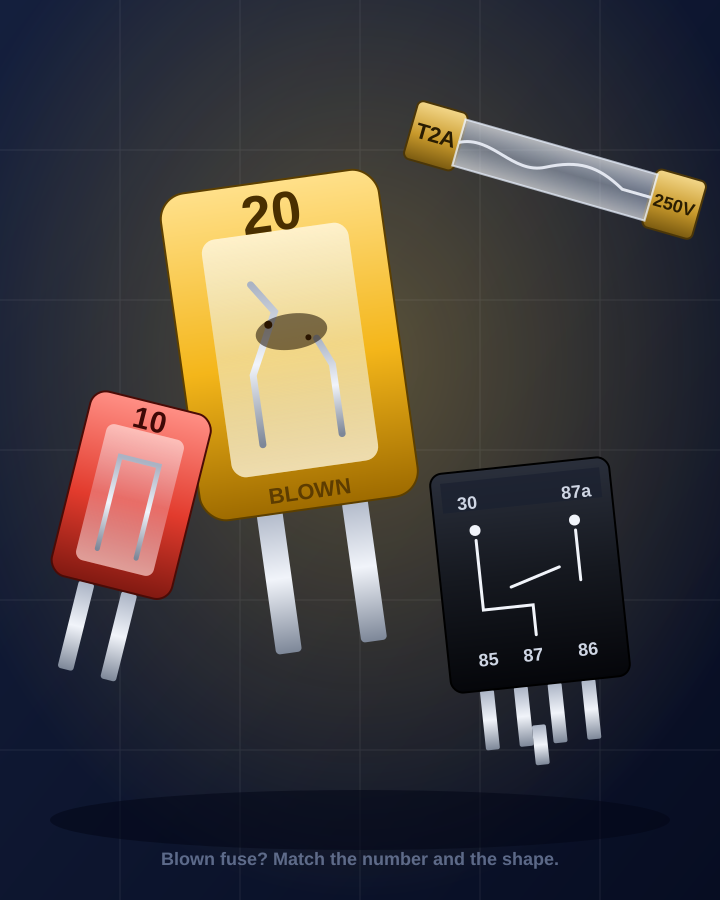
- Relay A small plastic cube with four or five flat metal pins and a little wiring picture on the side.
- Blade fuse A tiny coloured plastic piece with two flat legs and a number on top. The number is its rating; replace it only with the same number.
- Sway bar link A short rod with a small joint or rubber bush at each end, from the suspension.
- Trim clip A small plastic rivet with a centre pin. These hold covers and panels, and a few always go missing.
- Serpentine belt One long flat rubber belt with fine ribs running along the inside.
Why the same part does not fit every car
Two ignition coils can look the same in a photo and still have a different plug or a different length. Car makers change parts between model years, between engines, and sometimes in the middle of a year. This is why the name alone is not enough to order.
The safe order is: name first, then the number on the part, then your car’s details. A part made by the car maker is often called an original or genuine part. Parts from other companies are called aftermarket parts. Both can be fine for filters, bulbs and clips. In every case, check that the seller lists your exact car, and keep the old part until the new one is fitted.
Before you take the photo
- Let the engine cool before you touch anything under the hood.
- Take the photo before you remove the part, so you remember where the plugs and hoses go.
- Photograph the part from two sides, plus a close-up of any numbers.
- Put a coin or a ruler next to small parts so the size is clear.
Honest limits
Seek names the kind of part and helps you look for where to buy it and how to fit it. It cannot confirm that a part fits your car, and it cannot always read the exact brand or model from a photo. A result can be wrong, and the photo is sent to Seek’s servers to be identified. Seek does not give prices or valuations.
Some parts keep you alive. For brakes, steering, suspension, tyres and seat belts, use the part the car maker specifies and have the work checked by a qualified mechanic. Do not handle or test airbag parts yourself.
Flat tire and a small chrome socket in the glove box? See what is a wheel lock key?. Found a tool next to the part instead? See identify a tool by photo; the feeler gauge in that guide is the tool used to check spark plug gaps. For bolts that came out with the part, see identify a screw or bolt by photo. If a circuit is dead and you suspect the fuse box, see identify a fuse or relay by photo. For parts of machines at home, see find a spare part from a photo, and for the handbook, find a user manual from a photo.
Common questions
How can I identify a car part from a picture?
Put the part on a plain surface in good light and scan it with Seek. You get a name and a category. Then look for a part number on the part and match it with your car's year, make, model and engine.
Where is the part number on a car part?
It is usually stamped into the metal, moulded into the plastic, or printed on a sticker. Clean the part first. There may be two numbers: the part number and a factory code. Keep both.
Can a photo tell me if a part fits my car?
No. A photo gives the kind of part. To check the fit you need the part number or your car's details, such as the year, model, engine and VIN. Always confirm with the seller.
Which is the left side of a car?
Left and right are named from the driver's seat, looking forward. This is the same in every country, and it matters for parts like mirrors, lights and suspension parts.